Timeline for Brown County, Texas 1838 - 1899
By Frank T. Hilton & Clay Riley
Forward
This is a chronological listing of the events, organizations and activities that happened in
Brown County from 1838 to 1899. Because of the length of the original work that went from 1838 to 2013, it has been shortened for this column.
Information for this timeline was taken from many different sources. That includes the
Brownwood Bulletin, The Daily Bulletin, The Brownwood Banner, The Lorene Bishop
Collection, various historical books published by the Brown County Historical Society,
individual published documents, pamphlets, the Internet, Brownwood Area Chamber of
Commerce, Early Chamber of Commerce, The Brownwood Public Library and other places too numerous to mention here.
1838 - 1899
September, 1838 – John Belden, and his assistants, George L. Bledsoe and M. A. Bigham, made
the first land surveys within the area of present Brown County.
1850 - The Zephyr, Texas, community was initially located on the banks of Blanket Creek. The
name Zephyr, meaning soft, gentle wind, was first used by land surveyors who were trapped in
the area during a blue norther. A school was founded in 1876. Zephyr's first store opened in
1878 and a post office was established the following year. In 1885, the Gulf, Colorado and Santa
Fe Railway completed a line from Brownwood to Lampasas that missed Zephyr by
approximately a mile. Store owner J.M. Wilson moved his store and the post office one mile east to its present site. The community would later become a station on the railroad.
1856 – James H. Fowler, was the first cattleman in Brown County, who drove the cattle into the
county.
1856 – Camp Colorado was established on Mukewater Creek near the Colorado River as part of
a secondary line of defense against the Indians.
August 27, 1856 – Brown County created by Texas State Legislature. This is the official
birthday of Brown County. Brown is named for Henry Stevenson Brown, a commander at the
Battle of Velasco.
1856-1857 – Welcome W. Chandler, Samuel R. Coggin and J. H. Fowler settled their families in
Brown County.
1857 – The community of Thrifty was established after the U.S. Army relocated Camp Colorado,
a frontier defense post, along nearby Jim Ned Creek. The first family to settle permanently in
the area was that of Charles Mullins, along with three sons and one daughter and their families, who established ranches and homes in the Jim Ned Creek Valley.
March 21, 1857 – The first election was held in Brownwood County in the home of Welcome W.
Chandler. None of the elected officers ever serve as the legislature's order forming the county
was faulty, having outlined the borders of the county incorrectly. This was corrected by the
lawmakers in 1858, and a new election was held.
1858 - The first courthouse was built on the Chandler farm. It was a single story, 16 X 18 log
structure built of logs harvested from the nearby Pecan Bayou. The courthouse was seated with
split log benches. Ichabod Adams donated a rawhide bottom chair for the use of the judge. The
papers, records, and other items of importance were kept in a flour sack.
1859 - The first site of the Courthouse did not have a reliable source of good water. Therefore, it was moved, log by log, to the Connell farm. The Masons added a second floor to use as a
Masonic Lodge. This courthouse was located on the East side of the Pecan Bayou, near the Connell Cemetery on present day Williams Ranch Road.
February 20, 1860 – First Post Office established with Welcome W. Chandler as Postmaster.
1862 – Blanket, Texas. Two of the earliest settlers in the area were F. M. Cross and Dan Pinkard.
Pinkney Anderson established a store in 1873 and was the first postmaster when a post office
was established in 1875. When the Fort Worth and Rio Grande Railroad was extended from
Comanche to Brownwood in 1891, Blanket was moved from its former site to its present location
1863 – The first church organized in the county was a Methodist congregation in the Hannah
Valley community. The church was organized by two Methodist ministers, George Vest and
William Mayberry, both residents of Comanche county.
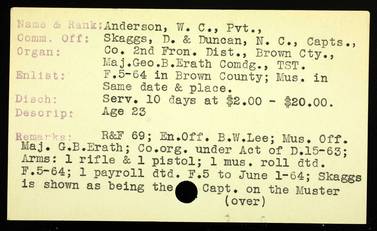
1863 - 1864 – Many County residents joined the Texas State Troops to protect the frontier during the Civil War.
June 13, 1865 – A charter was issued to the Masonic Lodge. The first meeting place was on the
second floor of the first Brown County Courthouse, which was a log structure. The court
occupied the lower floor of the building. James E. Stiles was the worshipful master and Isaac
Mullins, the senior warden.
1868 – Greenleaf Cemetery established when Greenleaf Fisk gave five acres to the town for a burial place.
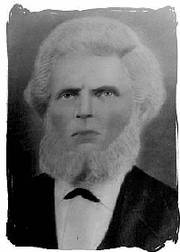
Judge Greenleaf Fisk
1870 – The County Courthouse was moved from the East side of the Bayou to land donated by
Greenleaf Fisk on the West side. The log courthouse was once again disassembled and moved,
but the puncheon floors were replaced with sawn planks. The two-story building was
reassembled on the corner of E. Broadway (now N. Fisk), and Clark (now Water). This building
was considered too small by 1876, just 5-6 years after it was moved.
February, 1870 – The Hog Creek Indian fight took place.
1873 – 74 – The first public schools opened in Brown County. With a student population of 332
they were housed in eight schools – all log structures. Children's education since 1856 had been
private.
1874 - John Wesley Hardin and gang celebrate his 21st birthday in Brown and Comanche
Counties. Deputy Charles Webb draws his gun, provoking a gunfight that ends Webb’s life. A
lynch mob is formed, but Hardin and his family are put into protective custody. The mob breaks
into the jail and hangs his brother Joe and two cousins. Hardin flees.
1874 – Chidester Stage Company established a stage coach line between Brownwood and Fort
Worth. It took two days and 22 hours to make the trip.
1875 – The Brownwood Banner, published every Thursday, began publication with Col. W. H.
Martin as publisher.

1875 - 1875 The Fort Worth-Brownwood stage is robbed five times in two months.
July 10, 1875 – Pinkney Anderson was appointed Postmaster for Blanket, Texas.
April 15, 1876 – J. C. Weakley came to Brownwood from Comanche to put the roof on a building at Center Ave and South Broadway. He opened a business in the middle of the block on South Broadway facing the Brown County Courthouse.
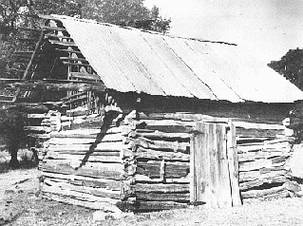
1876 – Zephyr's first schoolhouse was built in 1876 on a plot of land given by J. W. Braddock. It
was a one-room log cabin situated in about the center of Bee Branch community, where the
cemetery is located today. A little post oak tree standing near the head of Isham Smith's grave in 1938 was near the East door of this schoolhouse.
The little log cabin had a dirt floor and was furnished with split log benches. It has an
enrollment of 15 pupils, each paying $1.50 per month tuition. The Rev. T. A. Ish was the first
teacher.
1876 - A school was founded in May.
In 1876 - The citizens of Brown County approved bonds for a new courthouse. It was completed
in January or February of 1877. It was two stories and was 22 ½ feet by 42 ½ feet. The jail was
on the first floor and the courtroom was on the second floor
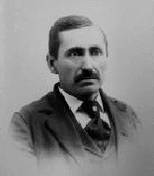
Brooke Smith
1876 - Brooke Smith opened the Pecan Valley Bank after moving to Brownwood the year earlier and opening a general store on the southwest corner of the courthouse square.
1876 - Indian Creek, TX, on Farm Road 586 in southern Brown County, was named for a local
watercourse. In 1876 a post office was established in Francis Harris's general store, and that
same year a school was built in Tom McAden's pasture. The community had two stores, a cotton gin, and a blacksmith shop in 1879.
1877 – The City of Brownwood was incorporated.
1877 – First cotton gin built by Brooke Smith.
1879 – May, Texas was named for pioneer settler W.D. May. May's brother, Nathan, opened a
store at the site in 1879. A post office was established two years later. In 1907, May had a
blacksmith shop, general store, newspaper, and a bank. That same year, the community became a stop on the Brownwood North and South Railway. The line was abandoned in 1927.
1879 – Post Office opened in Zephyr in a small store near the old Blanket Creek Bridge. The
store was established by J. M. Wilson.
1879 – The first Oil well that was discovered in Texas was located on the corner of Fisk and
Baker Street in Brownwood, at the site of the former Brownwood Hotel, by a crew digging a
water well.
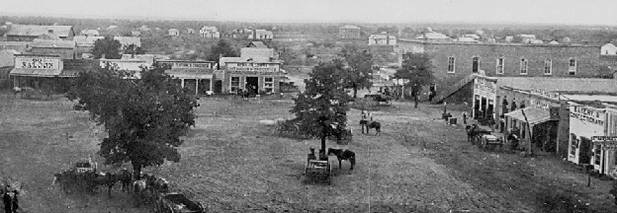
1880 – Courthouse Square
March 29, 1880 – The Brown County courthouse was burned by arson. Courthouse arson was,
unfortunately, common during this time period, and was often used to destroy evidence of land
fraud or crime. For many years after the Brown County Courthouse burned, citizens speculated
that it was burned to destroy evidence of a grand jury indictment of a prominent citizen.
June 3, 1883 – Brownwood Independent School District was incorporated.
August, 1883 – A petition for a Zephyr Masonic Lodge was presented. John M. Wilson was the
First Worshipful Master. Charter officially dated December 12, 1884.
September 22, 1883 – In less than two hours nine buildings were reduced to ashes, destroying
businesses in Brownwood.
October 26, 1883 – Greenleaf Fisk gave a half acre to the Pecan Valley I00F Lodge No. 236 in
the Greenleaf Cemetery for burial of its members.
December 3, 1883 – Greenleaf Fisk gave a half acre to the Brownwood Masonic Lodge No. 141
AF and AM for burial of its members. There have been four additions since then and the
cemetery holds over 18,000 burials.
February 27, 1884 – The city jail, known as the "Chicken Cop" burned.
November 1884 – The Brownwood Bulletin, founded by J. Minor Shaffer began publishing a
weekly.
1884 – Brownwood had ten saloons, most were located around the courthouse square.
1885 - The Gulf, Colorado and Santa Fe Railway completed the line from Brownwood to
Lampasas in 1885, missing the town of Zephyr by about a mile. J. M. Wilson moved his small
store and the post office to the present site, and the next year Zephyr became a station on the
railroad.
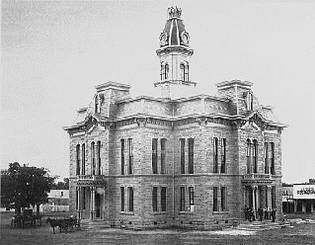
1885 Brown County Courthouse
February 15, 1885 – A new Courthouse was completed. It was a two-story structure made of
native sandstone with a clock tower. No clocks were ever installed. This Courthouse was
constructed much like the still standing old jail.
December 31, 1885 – Passenger service to Brownwood came with the first train into Brownwood on December 31, 1885 by the Gulf Colorado & Santa Fe Railway. The first passenger was Dr. James Johnson. First locomotive that pulled into Brownwood was engine 37.
1886 – First Brownwood city water system was built while Brooke Smith was Mayor.
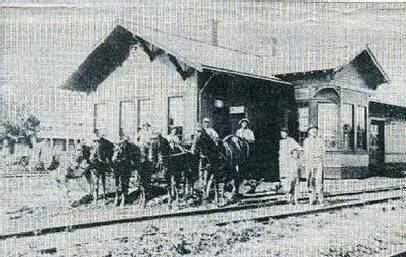
Gulf and Colorado and Santa Fe Depot at Bangs
1886 – A depot was built in Bangs, Texas, with the coming of the Gulf and Colorado and Santa
Fe Railway Company.
1886 - Texas Rangers killed two fence cutters in the ongoing battle between farmers and
ranchers over fencing open range.
1886 – The City of Brownwood built the Old Dam, located on the Jack Smith place, and built the
water mains and put in the pump station. John Kennedy managed the station which was
connected to Wash Hall's livery stable, by the only telephone line in the entire county.
January 11, 1886 - The Santa Fe Road commenced running regular trains to Brownwood on a
Sunday. There would be but one passenger train each way daily. Two freight trains would run
daily each way and carry passengers. The passenger train left Brownwood at 6:30 a.m. and
arrived at Temple at 11:15 p.m. The passenger train from Brownwood connected with the main
line train for Galveston at Temple.
January 26, 1886 - The first mail pouch over the new railroad from Lampasas to Brownwood
arrived that night.
April 1, 1886 - The line from Brownwood to Coleman Junction, Coleman and Ballinger placed
in operation by the Gulf, Colorado & Santa Fe Railway.
May 24, 1886 – Mr. James W. Atchison officially became Postmaster at Bangs, Texas. Prior to
the establishing of the post office, the settlers in the Bangs area had to ride horseback over to
Brownwood, Texas and get their mail.
December 9, 1886 - Brownwood Volunteer Fire Department organized.
1887 – Seven hundred square miles of Brown County land was transferred to create Mills
County.
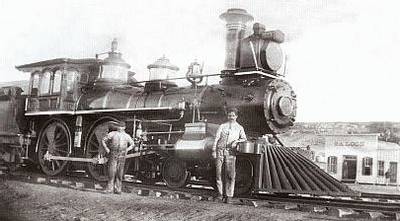
1887 - Local Train in Brown County Mud Creek Area
1888 – The first picture show was outdoors on the back of the Northeast side of the building at
101 Fisk as you entered the lobby of the Maxwell House Hotel. There were no seats, you simply
stood in the courtyard and watched the show. It was a magic lantern show done with slides.
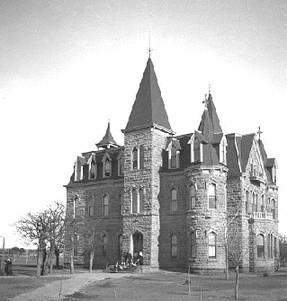
Daniel Baker College
April 5, 1889 – Daniel Baker College was opened for the fall semester. The first class of Daniel Baker graduates, consisting of eight students, graduated in May 1895.
September 20, 1890 – Howard Payne College was opened for the fall semester, the same day as the cornerstone was laid for the main building.
1891 – First depot built in Blanket, Texas, for the Fort Worth & Rio Grande Railway Company.
1891 – First street lights were installed in downtown Brownwood.
July 18, 1891 - The Fort Worth & Rio Grande Railway opened to Brownwood. First passenger
train left Fort Worth at 3 p.m. and arrived in Brownwood at 9:30 p.m. Railway had contracted
for 100 carloads of cattle and would begin to move the cars during the coming week.
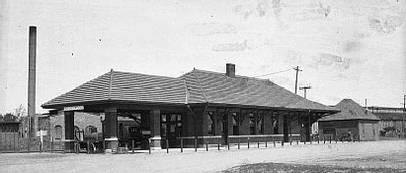
Frisco Depot located on the West Side of Brownwood
August, 1891 – The first house was built in Blanket, Texas
1892 – The first May school building was constructed near the present site of the May High
School. The school had two-rooms.
1892 – The first school building in Bangs was a 2-room frame structure on the south side of the
railroad tracks. Miss Clemie King was the first teacher; enrollment totaled 35 pupils.
April 2, 1892 – The first issue of The Blanket Herald was published. Mr. Baldwin was the
publisher.
November 23, 1892 - The first Santa Fe Depot in Brownwood burns. A depot building was
shipped to Brownwood from Pairs, Texas. When the new depot was built in 1910 this building
became the freight office.
1893 – Guy Skinner edited and published The Blanket Signal in a one-room building in town.
May 31, 1894 – "Brownwood is a fine town, located in a fine farming region (when seasons are
favorable) and shows thrift and enterprise. They have a good system of waterworks, electric
lights, oil mill, compress, flouring mill and other enterprises that one expects to find in the
largest town west of Fort Worth. Substantial stone and brick business houses abound, while
they have two large colleges, four newspapers, six churches, a large public-school building and
many find residences." (Granbury News)
May 31, 1894 – "Brownwood is a much nicer town now than three years ago. The hell holes
have all been stopped up, and instead of brilliant red noses there are electric lights. The knights
of the green cloth have emigrated and, in their stead there are more preachers and school teachers and newspapers." (The Coleman Voice)
1895 – Mr. Key, a printer, published the first "May Messenger."
1895 – The sale of liquor and open saloons were voted out of Brownwood.
January 17, 1895 – "Brownwood's electric light plant will be moved to Cleburne. Dublin's arc
lights have also been dispensed with. Both towns bit off a good deal more than they could worry down." (Comanche Chief)
January 24, 1895 –The Brownwood Cotton Oil Company makes its own electricity and lights up
the entire plant, offices, grounds, and seed houses from its own dynamo. Because of having it
own electricity, the plant ran night and day and had a double crew of hands. They expected to
work ten thousand tons of seeds that season and producing three hundred and eighty thousand gallons of oil, and the meal and hulls from the mill to fatten six thousand beeves.
January 31, 1895 – Brownwood may soon be lighted again with electricity. Parties have been
prospecting with a possible view to putting in a plant.
March 1895 – The first ice plant was opened in Brownwood by A. H. Hennesdort. It was located
on East Lee Street a little more than a block of Fisk Avenue. It was from this site that the first
electrical lines were provided to businesses.
1893 – The Blanket Herald was published by George Kornegay in Blanket as their first
newspaper.
1896 – Dulin, TX. It is located just off U.S. Highway 377 some two miles southeast of
Brookesmith in Brown County. The farming and ranching community was named for Thomas S.
Dulin, a teacher who served in the Civil War in Gager's Mounted Battalion. The first Dulin
postmaster was Joseph J. Boyd, who was appointed in 1896. The Dulin post office was
discontinued in 1903.
1896 – Rufus F. Hardin, an experienced teacher, came to Brownwood and became principal and
teacher in the "Cordell School" located on the corner of Cordell and Hendericks streets and
Beaver and Cordell streets. The grade level of the school was six and later expended to the
eighth.
August 1896 – The first public notice of the use of telephones in Brownwood came in August,
1896, when a local paper announced that Walter J. Lee, who operated an ice factory and
provided electric current for a few homes in the vicinity of the Santa Fe Railroad, had install six
telephones in the city. (Something About Brown)
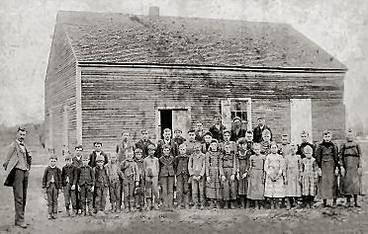
1897 – The first school in Bangs was open sometime in the middle 1890's.
June 1898 - Sanborn-Perris Map Company showed that Brownwood Cotton Oil Company and
Western Compress Company had electric lights, provided by onsite electric generators. They
also showed an "Old Elect. Light Plant that had all of it machinery removed.
1899 – Dr. Mollie Armstrong opened her optometrist office in Brownwood. She was the first
woman Optometrist in the United States. She served as president of the Texas Optometric
Association and was given a life membership in the American Optometric Association. (quote from: The Nice and Nasty in Brown County)
This and many other stories are available at the Brownwood Public Library – Genealogy & Local History Branch at 213 S. Broadway. Volunteers from the Pecan Valley Genealogical Society are there to assist you in your family or local history research.
The complete CD, “Brown County Timeline 1838 – 2013”, can be purchased at the Brownwood Public Library’s Genealogy Branch across from the courthouse. All proceeds benefit the library.